SURFFORECASTS
Wave height, swell, wind and tides for surf spots across northern Europe. Browse forecasts here, or use NORDR on iPhone for custom spots, alerts and a session log.
Find your break
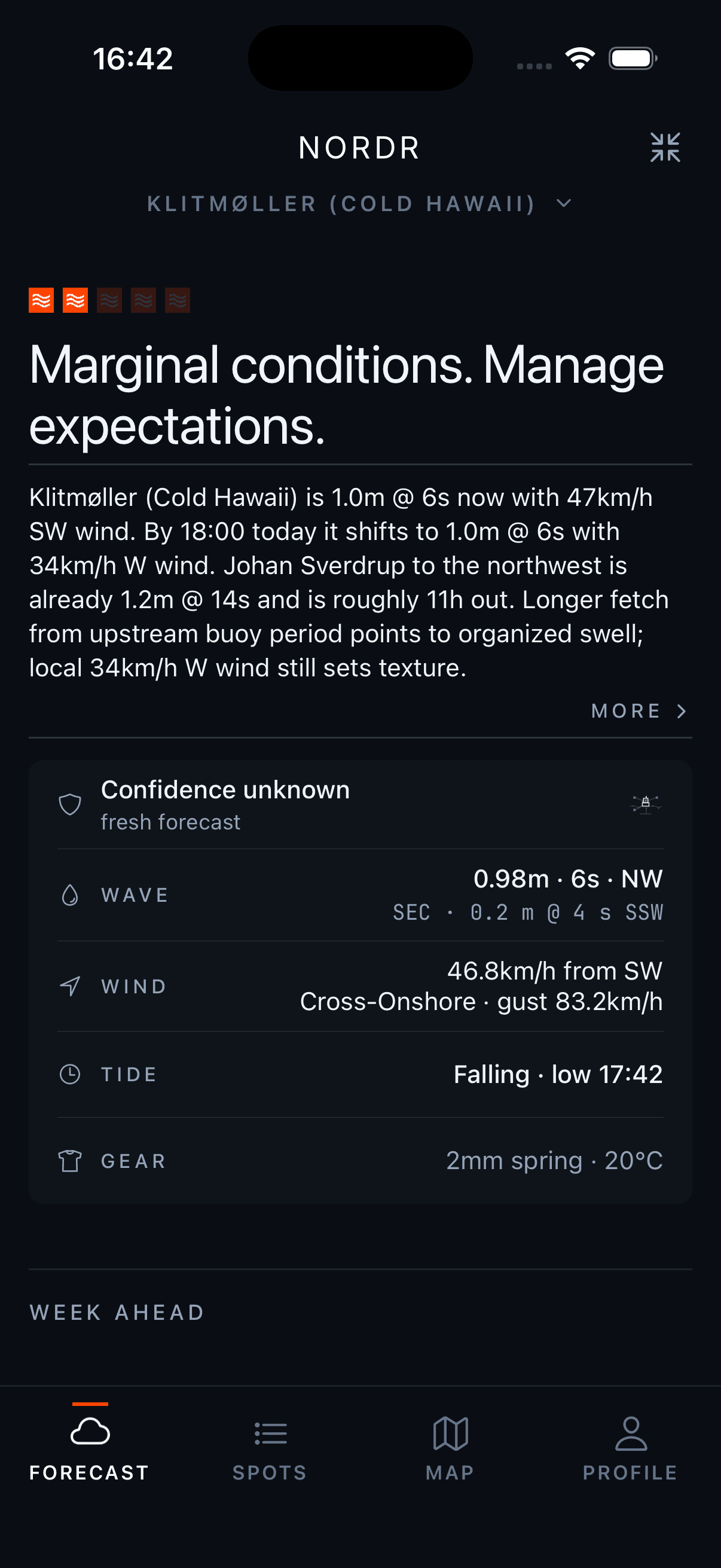
Waves, wind and tide
See the forecast for your break, with swell direction, local wind and tide times.
- WAVE
- Height, period and direction, with the secondary swell underneath.
- WIND
- Speed, direction and whether the wind is offshore, cross-shore or onshore at this break.
- TIDE
- Rising or falling, and the clock time of the next high or low.
- GEAR
- Water temperature and the suit for it, boardshorts through to a 6/5 hooded steamer.
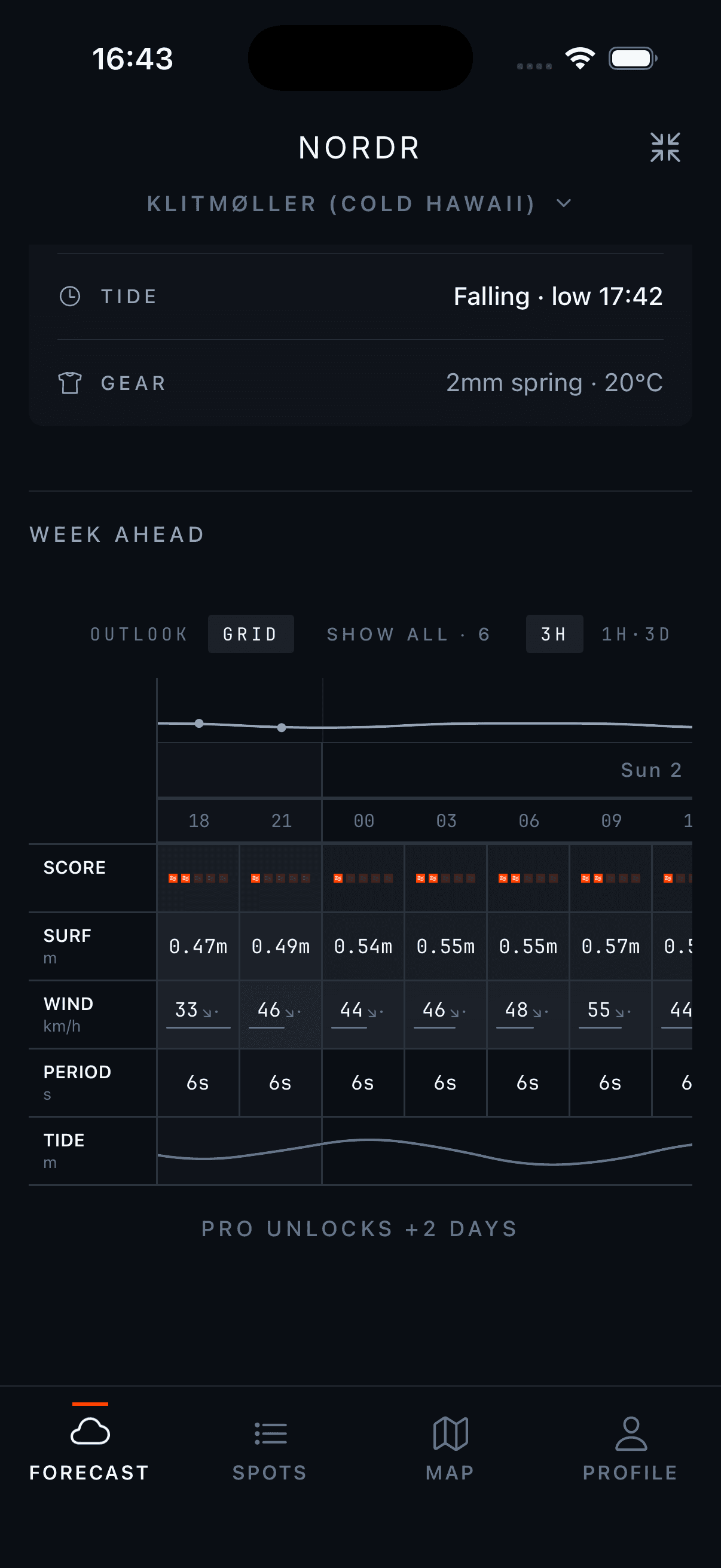
Hourly and weekly forecasts
Score, surf height, wind, period and tide across the week, hourly for the first two days. Free covers five days. Pro covers seven.
Local tides and wind
Tide can change how much swell reaches the beach. NORDR takes local tide conditions and beach orientation into account when rating a break.
BELGIUM
De Panne to Knokke
The rating accounts for reduced swell at low tide along the Belgian coast.
NETHERLANDS
Domburg to Texel
The rating accounts for the coastal banks and the break's working tide.
DK, DE, SE, NO
Hanstholm to Unstad
The rating uses local wind and swell conditions, with less weight on tide.
Wind direction at your break
The same 30 km/h westerly can be offshore at one break and onshore at another. NORDR shows wind direction, gusts and their effect on the surf for each spot.
Save your own spots
Add a spot on the map and set its break type, working tide, and preferred wind and swell directions. Check its forecast alongside the listed breaks.
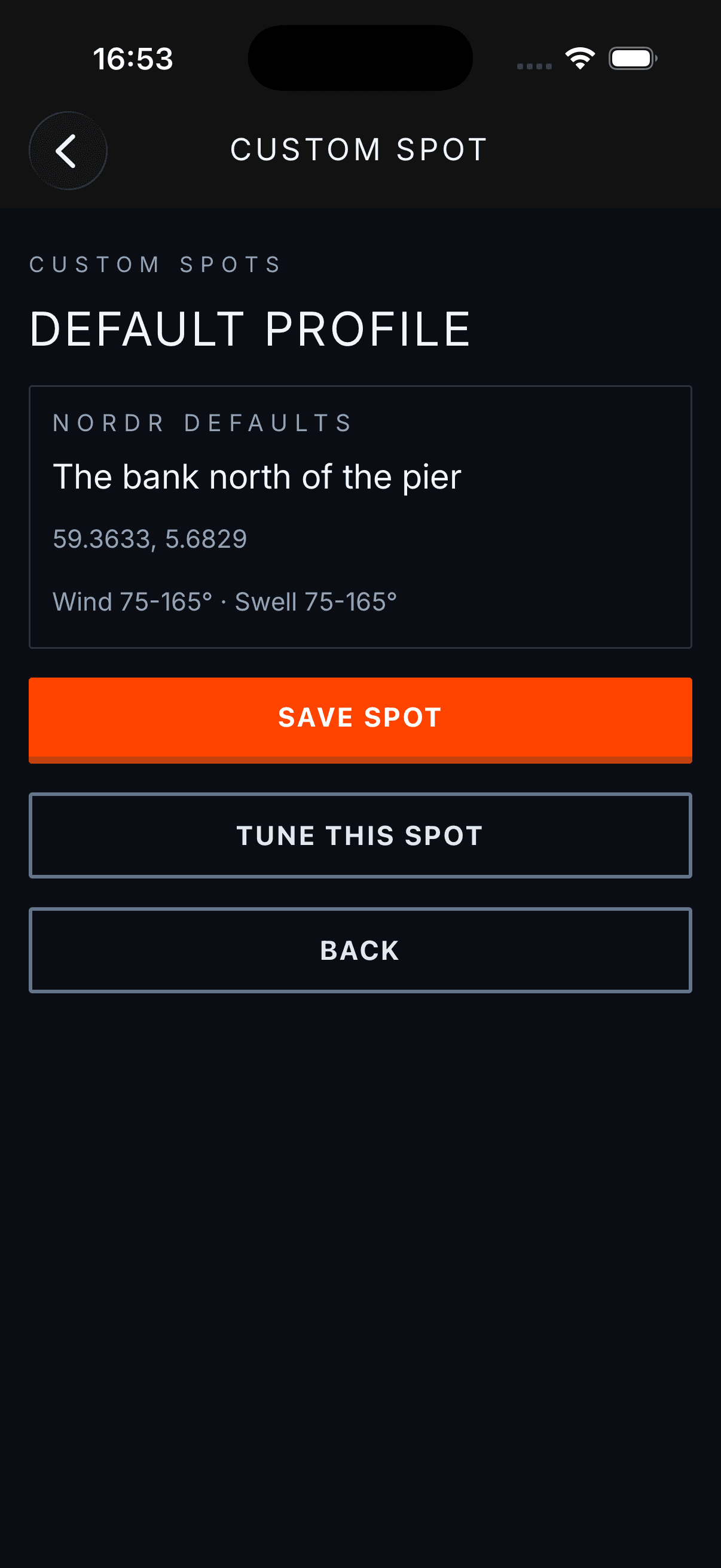
- 01PINChoose a location on the map.
- 02PROFILEBeach, point or reef, with its preferred tide.
- 03WINDOWSSet the wind and swell directions that suit the spot.
- 04SCOREDCheck forecasts, set alerts and compare the spot with others.
Compare spots
NORDR compares your pin with listed breaks under the forecast conditions and gives a match out of 100. Tide carries the most weight, followed by wave height and swell direction.
Pins are free and unlimited. Free keeps one of them tuned, Pro keeps all of them.
Log your sessions
Save a session with its waves, wind, location and time. Add your rating and notes.
RATING
Out of ten, in half-point steps.
BOARD AND SUIT
What you rode and what you wore. Longboard, midlength, fish, shortboard, step-up, soft-top.
CROWD AND SHAPE
Empty lineup through packed. Clean faces, peaky, running walls, punchy, soft, mixed, closing out.
OUTCOME
Hard work, mixed bag, fun session, scoring, all-timer.
Use your sessions to tune a spot
After three well-rated sessions within two kilometres of a spot, NORDR uses their median wave height and period as your ideal conditions there. The match then reflects your journal.
Five sessions in a rolling thirty days on free. Unlimited on Pro. The journal never leaves your phone.
Surf alerts
Automatic alerts cover the next morning, dawn patrol and improving conditions. Set the score, wave and wind thresholds for each rule.
Choose score, wave height, period, wind, tide and similarity to your tuned spot. Apply the alert to one or all saved spots, then set lead time, forecast range and quiet hours.
Your phone schedules alerts. Delivery depends on notification permissions and operating-system scheduling.
Free and Pro
FREE
The core surf forecast
- Forecast summary and surf rating for each listed break
- Five days of the grid, hour by hour for the first two
- Tide curve, swell trains, and the wave, wind, tide and gear rows
- Unlimited pins, one of them tuned
- Three automatic alerts and two of your own
- Five journal sessions in a rolling thirty days
PRO
More days and detailed planning
- Forecasts up to seven days ahead
- Wind, swell and waves near shore
- Break conditions and a dawn forecast
- Nearby breaks ranked by conditions and travel time
- Session match against your own journal
- Every pin tuned, unlimited alerts, unlimited journal
PRICE
€2.99 a month, or €19.99 a year with a seven-day trial. €59.99 a year covers five seats over Family Sharing. €79.99 once and it is yours.
Questions
Who is it for?+
Surfers planning around tide and wind, from beginners to experienced locals. Add your boards in the quiver. NORDR suggests a board when it clearly fits a tuned spot.
My break is not on the list.+
Pin it. A pin gets the same hourly forecast as a listed break, at its own coordinates, and you set the wind and swell windows yourself. Pins are free and unlimited. Free keeps one tuned, Pro keeps all of them.
How much of it is free?+
The call, the reading, the tide curve and five days of the grid at every break. Plus unlimited pins, three automatic alerts, two of your own, and five journal sessions a month. Pro is €2.99 a month or €19.99 a year.
Is there an Android version?+
Not yet. NORDR is on the App Store for iPhone. Every break has a page on this site you can read in any browser; alerts, the journal and pins are in the app.
Why stop at 7 days?+
Past seven days the timing of wind and swell is too loose to plan a session on, so the forecast stops at 168 hours.